


What Is the Asian Handicap Betting Strategy?
Introduction
Asian Handicap is a sports betting approach that uses a virtual advantage or disadvantage to create a more balanced market between two teams. Instead of relying only on the standard match result, the selected team starts with a handicap line that is added to or subtracted from its final score for settlement purposes. This removes the draw from many betting outcomes and gives bettors a more detailed way to assess the difference between the teams.
Key features of this strategy:
- Bets are placed on predefined handicap lines, which may be whole, half or quarter values, such as -1.0, +0.5 or -0.25.
- Some lines allow a stake refund or partial settlement in specific result scenarios, which adds an extra layer of risk control.
- It can be useful in matches with a clear favourite or when the teams are expected to be closely matched.
- It is often used by analytical bettors who want to evaluate probabilities, market prices and the real value of the available odds.
- It can be combined with disciplined bankroll management methods, including conservative staking plans with fixed bet sizes.
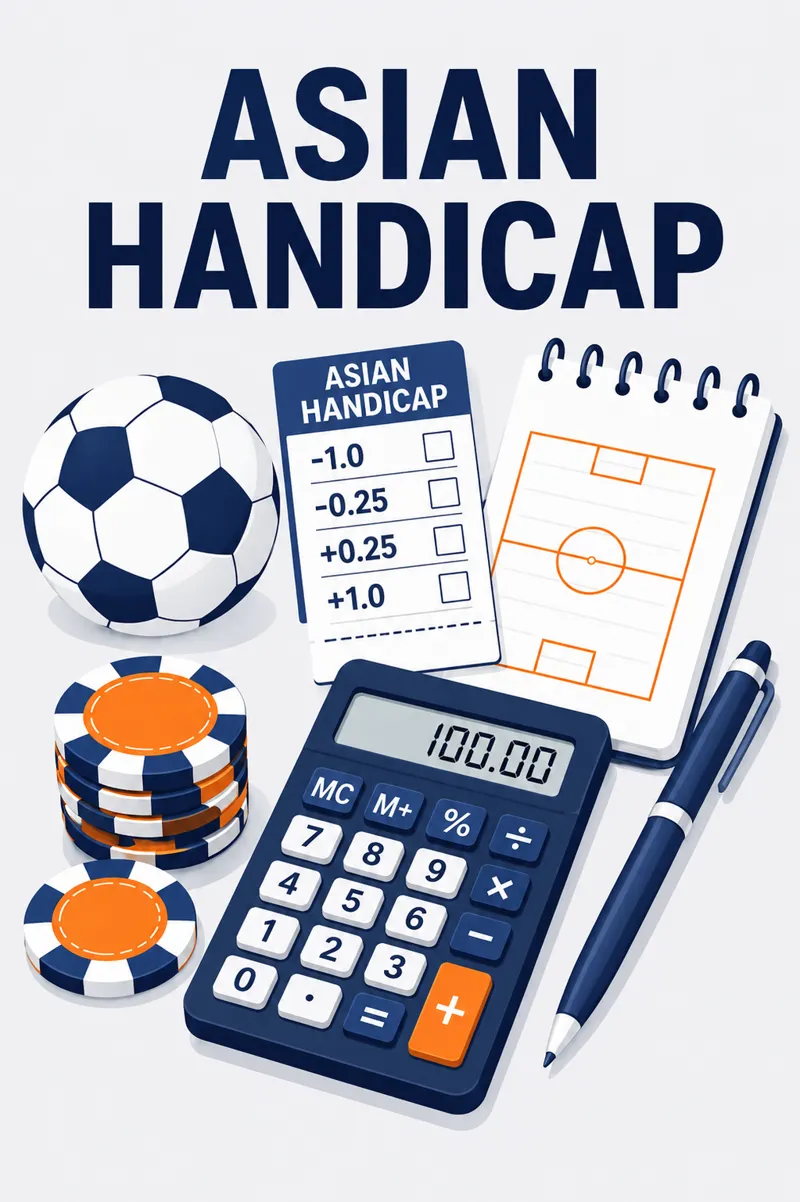
This type of betting gives South African sports bettors more flexible options when standard markets do not offer enough value. By choosing a suitable handicap line, the bettor can shape the level of risk and the expected outcome more precisely for a specific match. The strategy should always be based on clear reasoning, realistic match analysis and an understanding of how different handicap values affect the final settlement.
Types of Asian Handicap Lines
What the Different Handicap Values Mean
Positive Lines
Give the selected team a virtual advantage before settlement.
Zero Handicap
The stake is refunded if the match ends in a draw.
Negative Lines
Require the selected team to win by a certain margin.
Asian Handicap markets use values such as 0.0, +0.25, -0.5, -1.0 and others to remove or reduce the impact of the draw and provide more precise risk management.
Here is how some of the main line types work:
- 0.0 (zero handicap): If the match ends in a draw, the stake is refunded. This line is often used when the teams look evenly matched.
- +0.5: The bet wins if the selected team wins or draws. It can reduce risk when backing a team against a stronger opponent.
- -0.5: The selected team must win the match. A draw or defeat means the bet loses.
- +0.25 / -0.25: These are split lines. A stake is divided across two neighbouring handicap lines, which can lead to a half win, half loss or partial refund depending on the result.
- -1.0: The selected team must win by two or more goals for a full win. If it wins by exactly one goal, the stake is refunded.
Summary table showing how common Asian Handicap lines are settled:
| Line | Win | Loss | Refund / Partial Settlement |
|---|---|---|---|
| 0.0 | Selected team wins | Selected team loses | Draw |
| +0.5 | Selected team wins or draws | Selected team loses | — |
| -0.5 | Selected team wins | Draw or selected team loses | — |
| +0.25 | Selected team wins | Selected team loses | Draw: half win, half refund |
| -0.25 | Selected team wins | Selected team loses | Draw: half loss, half refund |
| -1.0 | Selected team wins by 2+ goals | Draw or selected team loses | Selected team wins by exactly 1 goal |
Each line type carries a different level of risk. Higher negative handicaps require a more convincing win, while positive handicaps can support selections where the bettor expects the underdog to stay competitive.
The right handicap line should be chosen after assessing the match context, including team form, motivation, squad news and relevant statistics. With a disciplined approach, Asian Handicap betting can help South African bettors manage exposure without relying on aggressive stake increases.
Example Scenarios with Football Teams
In a match such as Manchester City vs Brentford, the home side may be priced as a strong favourite. A -1.5 Asian Handicap line means Manchester City would need to win by at least two goals for the bet to be successful. A final score of 3:0 would therefore make the selected handicap line a winning bet.
In a more balanced fixture such as Lazio vs Bologna, a bettor might use a +0.5 line on the away team if the match looks close. With this line, the selection wins if Bologna either wins or draws. A result of 1:1 would therefore settle the bet as a win.
In a match where one side has a clear edge, such as Bayern vs Stuttgart, a -2.0 handicap may be considered. If Bayern wins 2:0, the bet is refunded because the winning margin is exactly two goals. A three-goal win or better would be needed for a full winning settlement.
A match such as Sevilla vs Osasuna can show how a positive handicap protects the underdog. If Osasuna is backed with +1.0 and Sevilla wins 1:0, the stake is refunded because the adjusted handicap result is level. This illustrates how the line can reduce risk in a narrow defeat.
In a fixture such as Inter vs Torino, the market may offer -1.25 on the favourite. If Inter wins 2:1, half of the stake is refunded on the -1.0 part, while the other half loses on the -1.5 part. This results in a half-loss settlement, showing how quarter lines split the risk across two neighbouring handicaps.
These scenarios show how Asian Handicap betting can apply in different match contexts: a strong favourite, a balanced contest, a narrow underdog position or a quarter-line setup. The approach requires disciplined analysis, careful line selection and a clear understanding of how each handicap is settled before placing a bet.
Advantages Compared to a Standard Bet
The Asian Handicap approach offers a more flexible betting structure than standard markets such as 1X2. Its main purpose is to balance the difference between two teams by applying a virtual advantage or disadvantage before the bet is settled.
Some Asian Handicap lines allow a stake refund or partial settlement. For example, a +0.25 line can return half of the stake and win the other half if the match ends in a draw, while a -0.75 line can produce a half win and half refund if the selected team wins by exactly one goal. This gives bettors more control over risk than a standard 1X2 bet.
Handicap lines allow a more precise assessment of expected performance. Instead of choosing only between win, draw or loss, bettors can work with detailed result scenarios that reflect small or large differences between the teams.
When backing a strong favourite, the standard win market may offer a very low price. By using a negative handicap, the bettor accepts a stricter winning condition in exchange for potentially better odds.
One of the main limitations of the 1X2 market is the draw outcome. With lines such as 0.0 or +0.5, the stake can be protected in some draw-related scenarios that would otherwise lead to a losing standard bet.
For bettors who use a systematic approach, Asian Handicap markets can support statistical analysis because each selection is tied to a specific line and margin. This can make it easier to compare expected outcomes with the available market price.
The wide range of available lines gives bettors the chance to choose a handicap that matches their match analysis. This provides more flexibility than a standard bet, which is usually limited to three main outcomes.
Overall, Asian Handicap markets provide more varied ways to manage risk and search for value. They can be especially useful when there is a clear difference in team strength or when a bettor wants a more precise betting angle than the standard win-draw-win market.
When and How to Use the Strategy
The Asian Handicap approach is most often used when there is a clear difference in quality between two teams, or when a match is expected to be balanced but one side may still hold a small edge. The main benefit of this market is that it can reduce the impact of the draw and allow more precise risk management than a standard match result bet.
When there is a clear favourite, but the price for a straight win is too low, a negative handicap can offer a more demanding but potentially more valuable option. In this case, the favourite must win by a specific margin for the bet to settle as a full win.
When two teams look closely matched, a positive handicap on the team priced as the underdog can reduce the risk of the selection. For example, a +0.5 line wins if the selected team wins or draws, while a +1.0 line is refunded if the selected team loses by exactly one goal.
When a team has inconsistent form or unpredictable performances, Asian Handicap lines allow a more flexible approach. Depending on the match context, the bettor can adjust expectations through whole, half or quarter handicap values instead of relying only on the standard win-draw-win market.
This strategy can also be used to reduce risk in uncertain matches. Lines such as 0.0 and +0.25 can provide a refund or partial settlement in draw-related scenarios, which may be useful when team news, tactical changes or recent form make the result harder to assess.
As part of a long-term betting strategy, Asian Handicap markets can help bettors model risk more carefully and build a more analytical approach to match selection. Many experienced bettors compare expected margins with available handicap lines before deciding whether a market offers value.
For South African bettors, this market can be a useful tool when the aim is to make more flexible decisions and manage risk with greater precision. Successful use of the strategy requires careful analysis, discipline and a clear understanding of how each handicap line is settled.
Frequently Asked Questions (FAQ)
It is a handicap betting method that balances the chances between teams of different strength by adding or subtracting goals or points for settlement purposes. The aim is to create a more balanced betting market and give bettors a more precise way to analyse a selection.
The most common lines are whole lines, such as -1.0 or +2.0, half lines, such as -0.5 or +1.5, and quarter lines, such as -0.25 or +0.75. These values determine how the bet is settled after the handicap is applied to the final result.
With a quarter handicap, the stake is split equally across two neighbouring lines. For example, a bet on -0.75 is settled as half the stake on -0.5 and half on -1.0. If the selected team wins by one goal, the -0.5 half wins and the -1.0 half is refunded, resulting in a half win. If the team draws or loses, the full bet loses.
Although Asian Handicap betting is most commonly associated with football, the same principle can also apply to sports such as basketball, tennis and hockey, provided the market supports a line-based advantage or disadvantage for settlement.
Yes. Like any betting strategy, Asian Handicap betting still carries a risk of loss, especially when the line is misread or the expected margin is overestimated. Bettors should understand how each line is settled, follow responsible staking habits and avoid increasing stakes aggressively after losing bets.
Useful skills include match analysis, understanding market movement, probability assessment and disciplined bankroll management. Experience with different handicap lines also helps bettors recognise how small changes in the line can affect the risk and potential return of a selection.