


Darts Betting – Complete Guide
Introduction
Darts is a sport that combines precision, concentration and strategic thinking. Although it has strong British roots, darts has built a global following and is increasingly recognised by betting fans in South Africa. With growing interest in PDC tournaments and other international competitions, darts has become a useful niche for players who want more variety beyond the major sports.
Why is darts becoming a popular betting choice?
- Dynamic events with frequent momentum shifts – every leg and set can change the direction of a match.
- A wide choice of markets – match winner, correct score, number of 180s, total legs and more.
- Clear statistics and player form – useful for analysis and building a more structured betting approach.
- Suitable for live betting – the pace of the game allows for quick reactions and adaptive decisions.
- Opportunity for outright bets – such as who will win a tournament or reach the final.
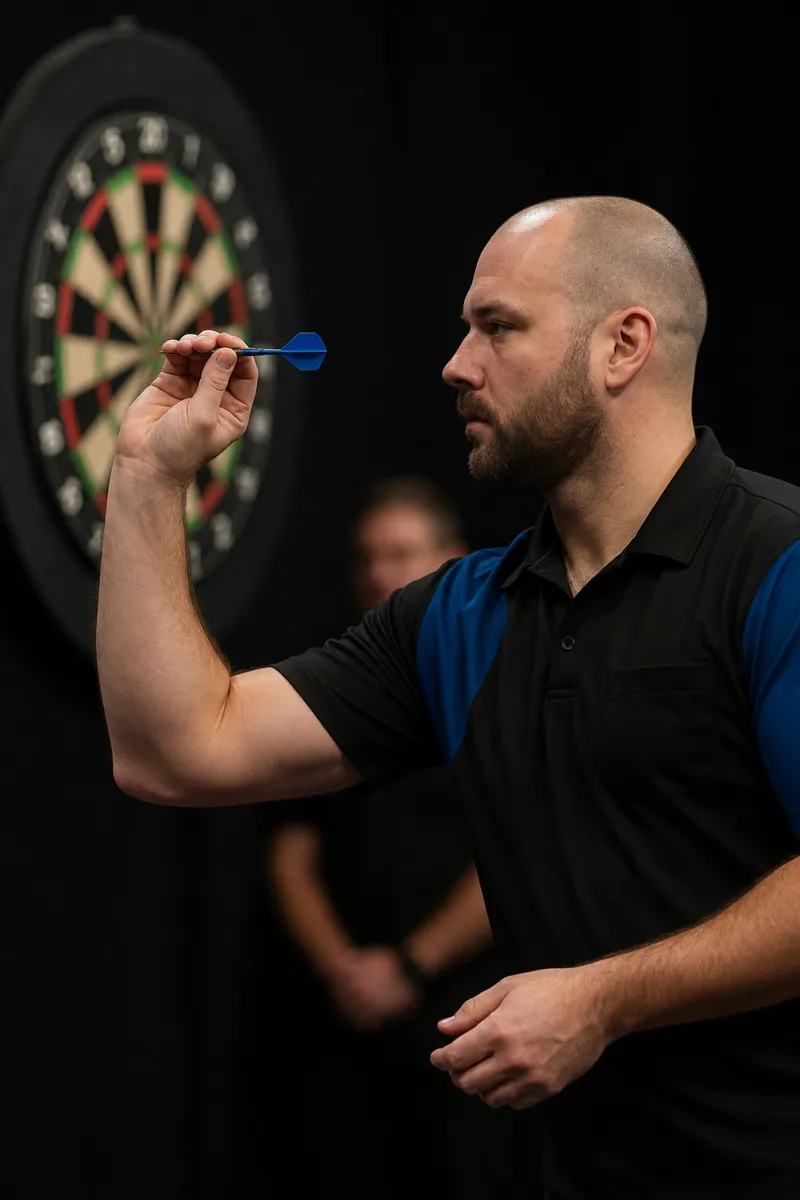
Darts betting has developed alongside modern digital betting platforms. From televised major tournaments to online coverage and live score updates, fans can now follow and bet on darts in real time from a computer or smartphone.
This guide explains the basics of darts betting – market types, major tournaments, strategies and practical tips for better planning. The aim is to give South African players a clear foundation for making more informed betting decisions with licensed South African betting operators.
Basic Rules of the Sport
How Darts Is Played
1 vs 1
Two players compete against each other in an individual format.
501 points
Each player starts with 501 points and must reach exactly 0.
Final double
To win a leg, the final dart must land in a double segment.
Darts is a sport where accuracy and concentration are essential. The most common format, especially in professional competitions, is "501" – players start with 501 points and must reduce their score to exactly zero by throwing three darts per turn.
Each area of the dartboard has a different value. The central bullseye is worth 50 points, while the outer bull is worth 25. The highest scoring segment is the triple 20, worth 60 points. Matches are played in legs and sets, and to win a leg, a player must finish with an exact hit in a double segment.
A professional match may be structured as best of 5, 7 or 11 sets, with each set including a fixed number of legs. This makes darts a strategic sport – it is not only about reducing the score, but also about controlling the tempo and choosing the right moment to finish.
Important: when betting on darts, it is useful to follow the average score per visit, double success rate and player form across recent tournaments. One poor spell or missed finishing opportunity can change the result.
Before placing a bet, consider the player’s form, the type of tournament involved, whether it is a ranking event, exhibition match or major championship, and previous meetings between the opponents. Mental strength also matters, as some players perform less consistently under pressure.
Understanding the rules of darts is only the starting point – watch, analyse and build a strategy. Do not bet only on reputation, because an underdog with strong focus can sometimes surprise the favourite.
Types of Darts Bets
Although darts is not as widely followed as football or tennis, it offers a wide range of betting options that combine skill, judgement and match analysis. For South African bettors looking for a more niche sports market, darts can provide useful opportunities when approached with discipline and a clear understanding of the available markets.
The most basic darts bet is the match winner. You choose which player will win the match. Since darts is an individual sport, it is important to understand the current form, scoring consistency and recent results of both players before placing a bet.
You can also bet on the correct score in sets or legs. For example, a player may be backed to win 3:1. This type of bet requires a stronger understanding of each player’s playing style, finishing ability and consistency under pressure.
One of the most popular darts markets is who will hit the most 180s in a match. A 180 is the maximum score from three darts, achieved by hitting triple 20 three times. Players with aggressive scoring patterns and strong rhythm are often better candidates for this type of market.
Like many other sports, darts also includes over/under bets, such as the total number of legs played. If you expect a close match, the over line may be worth considering, while a strong favourite in control may point towards fewer total legs.
Live betting on darts is also popular. It allows you to bet during the match, such as on the winner of the next leg, whether a player will hit a 180, or who will win a specific set. This requires real-time observation and quick decision-making.
Darts betting requires analysis of playing styles, mental strength and the ability to perform under pressure. Following player form, tournament format and previous meetings can give South African bettors a more structured basis for decision-making.
Available Darts Betting Markets
Darts betting is not limited to simply choosing the winner of a match. Modern licensed South African betting operators may offer a variety of markets covering key parts of the game, from the number of legs to specific scoring statistics. This allows bettors to use deeper analysis and choose the market that best fits their strategy.
Core markets usually include the match winner and handicap betting. If one player is a clear favourite, a handicap market can sometimes offer better value, for example -2.5 legs. This means the favourite must win by more than the stated margin for the bet to be successful.
Another popular option is the correct score, such as 3:2 in sets. This can be useful when you expect a close match. It may also be considered alongside over/under total sets markets when you expect the match to last longer.
One of the favourite markets among darts fans is most 180s – which player will hit the highest number of maximum scores. Some betting sites may also offer markets on the total number of 180s in the match or whether a player will go above a specific line.
More experienced bettors may also look at special markets such as highest checkout, total legs, win without losing a leg or the winner of a specific set. These markets provide more flexibility but require a clearer understanding of player style and match format.
Live markets in darts can also be useful, with options such as winner of the next leg, whether there will be a 180 or who will complete a checkout. Watching the match in real time can help you react to changes in rhythm, pressure and finishing accuracy.
Bonuses and Promotions
Welcome bonuses for darts betting may include a matched deposit up to a certain amount, such as a percentage boost on the first deposit. Before using any offer, check the minimum odds, qualifying markets, expiry period and wagering requirements, as these conditions can affect how useful the promotion really is.
Free bets can be a practical way to try a new darts tournament or a different market without using as much of your own balance. In many cases, the stake is not returned with the winnings, so it is important to understand whether only the net profit will be paid out after a successful selection.
Cashback offers can reduce the impact of a losing run, for example when a percentage of losses over a specific period is returned as bonus funds. These offers should still be treated carefully, because they usually come with limits, eligible market rules and additional conditions.
During major events such as the PDC World Championship or Premier League Darts, some licensed South African betting operators may offer boosted odds, tournament promotions or special darts markets. These can be useful when they match your own analysis rather than simply attracting attention through higher displayed odds.
Some betting sites may also offer accumulator promotions for multiple darts selections, where the potential return increases when more legs are added to the bet slip. This can add value in certain cases, but it also increases risk because every selection must usually win for the full bet to succeed.
Short-term promotional campaigns are common around major tournaments, but they should never replace proper analysis. Always read the terms, check whether the operator is licensed for South Africa, set clear limits and treat darts betting as entertainment rather than a guaranteed way to make money.
Darts Betting Strategies
Value betting in darts means identifying players or markets where the odds may underestimate the realistic chance of an outcome. If you believe a player has a better chance of winning a set or match than the price suggests, that selection may represent a value bet.
Flat betting is a steady approach for darts betting, especially when following several matches from the same tournament. By staking the same amount each time, you can manage risk more clearly and keep better control of your betting budget.
In darts, the Martingale strategy may be considered on markets such as total legs or set winner, but it requires strict discipline and clearly defined limits. This is a high-risk approach and is not suitable for every bettor.
In darts, it is important to understand player form and playing style. Some players are stronger in longer formats, while others perform better in shorter matches or early tournament rounds. Use this knowledge when betting on correct score, most 180s or match winner. Relying only on odds without proper analysis can be misleading.
Analyse scoring consistency, checkout percentages and previous meetings between players. For live betting, also watch for mental swings and pressure moments, because darts is a concentration-based sport and one poor spell can change the direction of a match.
Build a strategy based on real observation, disciplined staking and your own betting style. Darts is not well suited to random selections or emotional decisions. A measured approach with discipline, analysis and control can help South African bettors create a more sustainable way to bet.
Tips for Beginners
At the start, focus on major tournaments and well-known players. These events usually provide more statistics, previews and form information, which makes analysis easier. Avoid betting on unfamiliar names or low-profile matches without enough context, because an informed approach is always safer than guessing.
Darts betting can tempt beginners to chase high odds on surprise results, but favourites often win for a reason. Very short prices should also be treated carefully when the potential return does not justify the risk. Look for balanced odds supported by logic, form and match context rather than emotion.
Bet with a clear plan and avoid risking too much of your overall betting budget on one match. Good bankroll management is the foundation of a sustainable betting strategy. Keep notes on your selections, stake size, market type and reason for the bet, so you can understand which decisions work best over time.
Darts is a sport of precision and concentration, and betting on it should be just as measured. Do not let emotions after a win or loss affect your next decision. Follow your strategy, avoid impulsive changes and remember that discipline helps prevent costly mistakes.
Start with the understanding that darts betting is a form of entertainment, not a guaranteed source of profit. Learn from every bet, review what you judged correctly and what you missed, use statistics, watch matches and gradually develop your own approach.
Common Mistakes
One common mistake is ignoring current form and the playing style of a darts player. Some players perform better in shorter formats, while others are more reliable in longer matches. Look at recent performances, scoring consistency and how each player handles pressure before placing a bet.
In darts, rankings do not always reflect current form. A higher-ranked player may be out of rhythm, while a lower-ranked opponent may be in strong form. Do not bet only on reputation or familiar names; check recent results and whether the player has been performing consistently.
Darts tournaments vary by format. Some matches are played as best of 11 legs, while others use a set-based format. Ignoring this can lead to poor decisions, because some players start strongly in short matches while others improve as the match develops.
Failing to compare odds can reduce the value of your bets. Even a small difference in price can matter over time. Check the market carefully and look for the best available value from licensed South African betting operators before placing your selection.
Many beginners do not record their bets or review their mistakes. Without tracking your own decisions, it is difficult to improve. Keep notes on the stake, player, tournament, odds, result and reason for each bet, so you can identify patterns and adjust your approach over time.
Examples of Darts Bets
During a major darts tournament, a bettor places R200 on an underdog to win a match at odds of 3.80. After reviewing recent form, scoring consistency and previous meetings, the selection proves successful. Potential payout: R760. This is a classic example of a value bet.
A bettor uses a free bet of R100 on a market where a match is expected to produce over 10.5 maximum 180s at odds of 2.10. The match is high-scoring and finishes with 14 maximums. Depending on the free bet rules, only the net winnings may be paid out. This is a good example of using a special darts market.
In an early tournament round, a strong favourite faces a less experienced opponent. A bettor places R250 on a 3:0 correct score in sets at odds of 1.95. The favourite controls the match and wins without dropping a set. Potential payout: R487.50. This is a moderate-risk example based on match format and player level.
A bettor builds a three-leg accumulator with combined odds of 8.20, including one higher-risk selection. Before the final match, a cash-out offer of R700 appears from an original stake of R100. The bettor accepts the offer, and the final selection later loses. This is an example of using strategic cash-out to manage risk.
A bettor predicts that a close darts match will finish 4:2 in sets, staking R50 at odds of 9.50. After a competitive match, the score lands exactly as expected. Potential payout: R475. This is a higher-risk example of a correct score market where strong analysis is essential.
Legislation and Licences
In South Africa, sports betting, including darts betting, operates within a regulated gambling framework. Betting operators must be licensed by the relevant provincial gambling authority before offering services to local customers. This creates a more controlled and transparent environment for players.
Darts betting can be offered legally in South Africa when it is available through a properly licensed betting operator. Licensed operators are subject to regulatory oversight and must follow local requirements related to player protection, responsible gambling and fair betting operations.
When choosing a betting site, the most important factor is whether the operator holds a valid South African betting licence. A licence from the relevant provincial authority is a key trust signal, especially when checking whether a site is suitable for safer and more transparent sports betting.
Betting through unlicensed or unverified sites can create serious risks, including withdrawal problems, weak account protection and limited support if something goes wrong. These operators do not offer the same level of oversight as licensed South African betting sites, so it is safer to use verified licensed bookmakers only.
To check whether a bookmaker is licensed in South Africa, players can review official regulator information and look for verified operator details from the relevant provincial authority or national gambling resources. This helps confirm that the betting site is operating under recognised local oversight.
Frequently Asked Questions (FAQ)
Darts is a sport where players throw small darts at a special dartboard. The goal is to score points by hitting different areas of the board and, in common formats such as 501, reduce the score to exactly zero. It combines precision, concentration and strategy, and is played both casually and at professional level.
Yes, darts betting may be available through licensed South African betting operators. Common markets include match winner, total legs, handicap betting and special scoring markets. Before placing a bet, it is important to understand the tournament format, player level and current form.
Some of the best-known darts tournaments include the PDC World Championship, Premier League Darts and UK Open. These events attract strong players and often provide a wider range of betting markets. Their popularity also means that more statistics and match information are usually available.
To make a more informed bet, look at player form, scoring averages, finishing accuracy and previous meetings between the players. Players with strong scoring consistency and mental composure are often more reliable in pressure moments. The format of the tournament can also affect how a match develops.
Avoid betting blindly on familiar names, because a well-known player may still be out of form. Emotional betting, chasing losses and ignoring bankroll limits are also common mistakes. A better approach is to bet with a clear plan, compare markets and keep control of your staking.
The main darts betting markets include match winner, correct score in legs or sets, highest checkout and total number of 180s. Live betting markets may also be available, allowing players to bet during the match as the rhythm and momentum change.