


What Is the Dutching Strategy?
Introduction
The Dutching strategy is a method of distributing a stake across multiple outcomes within the same event, so that the potential return is roughly the same regardless of which selected outcome wins. It is most commonly used when there is more than one realistic winning option, with the aim of achieving more precise risk management.
Key Features of This Approach:
- The bettor splits the total stake across multiple selections within a single event.
- Each stake is calculated proportionally so that the potential return is balanced.
- Most effective in multi-outcome markets, such as horse racing or certain football betting markets.
- Requires accurate calculations or the use of dedicated betting calculators.
- Works best when the selected outcomes offer realistic value rather than simply covering more options.
- Helps reduce the chance of a total loss, but does not eliminate risk if all selected outcomes lose.
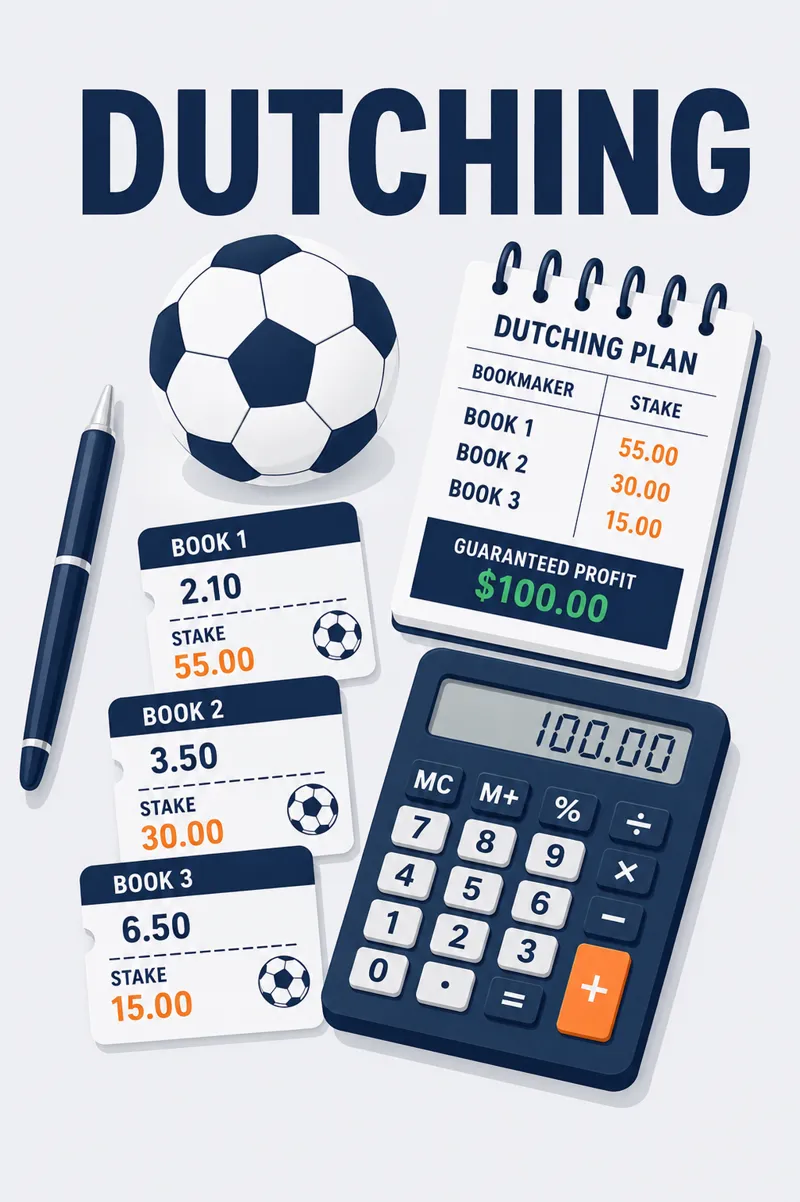
This method is often seen as a way of optimising opportunities in situations with a higher level of uncertainty, particularly when there is no clear favourite. It requires a structured approach and a solid understanding of odds and probability to be applied effectively.
How Dutching Works
Example With Real Numbers
Distributed Risk
The total stake is split across several options within one event.
Calculated Coverage
The aim is balanced profit regardless of which selected option wins.
Value Focus
The approach is used when more than one outcome has realistic potential.
This method is used when there are several realistic winning options within the same event. Instead of backing just one selection, the total stake is divided so that the potential profit is roughly the same for each selected outcome.
Let’s look at an example: a race has three leading contenders with the following odds:
- Runner A: 3.00 – Around a 33.3% implied chance of winning and a relatively strong contender.
- Runner B: 4.00 – Around a 25% implied chance and a solid second option.
- Runner C: 6.00 – A bigger-priced contender, but still with realistic chances in the right conditions.
The total stake is £100. The aim is for the return to be roughly equal if any of the three selected runners wins.
The stake distribution could look like this:
- On A: £44.44 – Lower odds require a larger share of the total stake.
- On B: £33.33 – A middle allocation that helps balance the return.
- On C: £22.22 – The smallest stake because the odds are higher, while the target return remains similar.
Expected return if any selected runner wins: approximately £133.33
| Selection | Odds | Stake (£) | Expected Return (£) |
|---|---|---|---|
| A | 3.00 | 44.44 | ~133.33 |
| B | 4.00 | 33.33 | ~133.33 |
| C | 6.00 | 22.22 | ~133.33 |
Note: Dutching requires accurate calculations and a clear view of whether each selection offers expected value. If the numbers are wrong, the result can still be negative even when one of your selections wins.
It is most commonly used in markets such as outright winner, top goalscorer, or race winner markets with a limited number of realistic contenders. The approach works best when your analysis identifies several selections with stronger chances than the odds suggest.
It is suitable for situations where you have a clear probability-based analysis and several options have realistic odds. Good stake management is essential for achieving a balanced return.
Advantages of the Dutching Strategy
The method allows you to spread risk across multiple outcomes. This creates a more balanced approach compared to backing a single selection and reduces the likelihood of a total loss.
When calculated correctly, each selection offers a similar potential return. This provides greater control over expected outcomes without relying on predicting one exact result.
The technique can be applied across different sports and market types, especially in events with more than two possible outcomes. This makes it a flexible tool within a broader betting strategy.
The focus on calculations and value helps reduce impulsive decisions. It encourages a more structured and disciplined betting process.
The approach can be particularly effective when there are odds differences across bookmakers. Comparing prices may create opportunities to improve overall returns.
Dutching requires accurate calculations and pre-planning, helping to build discipline and consistency. This makes it suitable for bettors looking for a more structured, long-term approach.
Disadvantages of the Dutching Strategy
One of the main challenges is the need for precise calculations when splitting the stake across multiple selections. Errors can lead to unexpected losses or significantly lower returns than planned.
The approach is not suitable for all events. When there are too many possible outcomes or when odds are very low, the strategy becomes less effective and may offer little to no value.
Some bookmakers apply limits on odds and maximum stakes, which can make it harder to fully execute the strategy, especially when working with larger amounts.
It requires detailed preparation, including comparing odds across different bookmakers. This process can be time-consuming and may require additional tools or software.
The strategy often delivers relatively small margins compared to the total stake. It is generally better suited to bettors seeking consistency rather than rapid bankroll growth.
If odds change after the initial stake allocation, the entire structure of the bet can be affected. This may lead to unexpected outcomes and potential losses if adjustments are not made in time.
Who Is the Dutching Strategy Suitable For?
The method is suitable for bettors who prefer detailed event analysis and understand the importance of value assessment across different betting options. Using it effectively requires the ability to spread risk across multiple outcomes.
The strategy is a good fit for those who prefer pre-planned betting decisions rather than spontaneous bets. It supports a more measured approach focused on controlled exposure and gradual results.
Dutching is often used by bettors who want greater bankroll control and lower exposure to sudden losses. It allows for more precise risk planning when betting on events with several possible outcomes.
The method is generally more suitable for bettors with a good understanding of odds and basic financial discipline. It is not usually recommended as a first strategy for complete beginners, as it requires calculation skills and an understanding of probability.
If the goal is fast and aggressive bankroll growth, this approach may feel too balanced. Dutching is not built around large single wins, but around gradual accumulation through careful stake distribution.
Tips for Using the Dutching Strategy
With this approach, the goal is to cover multiple outcomes within a single event by distributing your stakes in a way that produces a similar potential return regardless of which selected outcome wins.
Start with a clearly defined total budget for the event. A common approach is to risk a small percentage of your bankroll, typically around 2% to 5%, and split it across your selections. This helps maintain risk control.
A key element is the accurate calculation of stake sizes for each selection. Using a calculator or specialised tools is recommended to avoid mistakes and ensure a balanced return.
Your selections should be based on objective analysis, including form, statistics, and probability estimates. Without proper analysis, the strategy loses effectiveness and may lead to poor outcomes.
Including too many selections in one event can reduce your profit margin. It is generally best to limit yourself to 2 to 4 selections to keep calculations manageable and maintain efficiency.
Keep a betting log of your activity — including events, stake distribution, and outcomes. This makes it easier to review performance and refine your approach over time.
This strategy is less suitable for events with low-value odds or when there is uncertainty in probability assessment. In such cases, the risk may outweigh the potential return.
Dutching supports structured planning and flexibility across different events. When applied consistently and with proper preparation, it can contribute to more stable long-term results.
Frequently Asked Questions (FAQ)
Dutching is a betting method where the total stake is split across multiple outcomes in one event, aiming for a similar potential return no matter which selected outcome wins.
Stake amounts are calculated based on the odds of each selection and the total amount you want to risk. Many bettors use a Dutching calculator or specialist tool to balance the expected return accurately.
Dutching is most useful in multi-outcome events, such as horse racing, outright winner markets, top goalscorer markets, or other events with several realistic contenders.
Yes. Dutching is sensitive to odds movement and requires accurate calculations. Poor selection choice, incorrect stake allocation, or changing odds can lead to an unfavourable result.
It helps to understand odds, bankroll management, and basic probability. Beginners can use Dutching, but they should start carefully and rely on accurate calculations rather than guesswork.
With strong analysis and disciplined bankroll control, Dutching can form part of a wider betting strategy. However, it does not guarantee profit.