


What Is the Asian Handicap Strategy?
Introduction
Asian Handicap is a sports betting approach designed to reduce the natural advantage of the stronger team by creating a more balanced betting line. The system applies a virtual handicap that is added to or subtracted from a team’s final result. This removes the draw from the main betting outcome and gives Indian users a more structured way to assess the difference in strength between two sides.
Key features of this strategy:
- Bets are placed on predefined handicap lines, which can be whole, half or quarter values, such as -1.0, +0.5 or -0.25.
- This approach allows partial stake returns in specific result scenarios, adding an extra layer of risk control.
- It is useful in matches with a clear favourite or in fixtures where a closely balanced performance is expected.
- It is often used by analysts and bettors who want a deeper understanding of probabilities and the value behind odds.
- It fits well with broader bankroll management methods, including conservative staking strategies with fixed bet sizes.
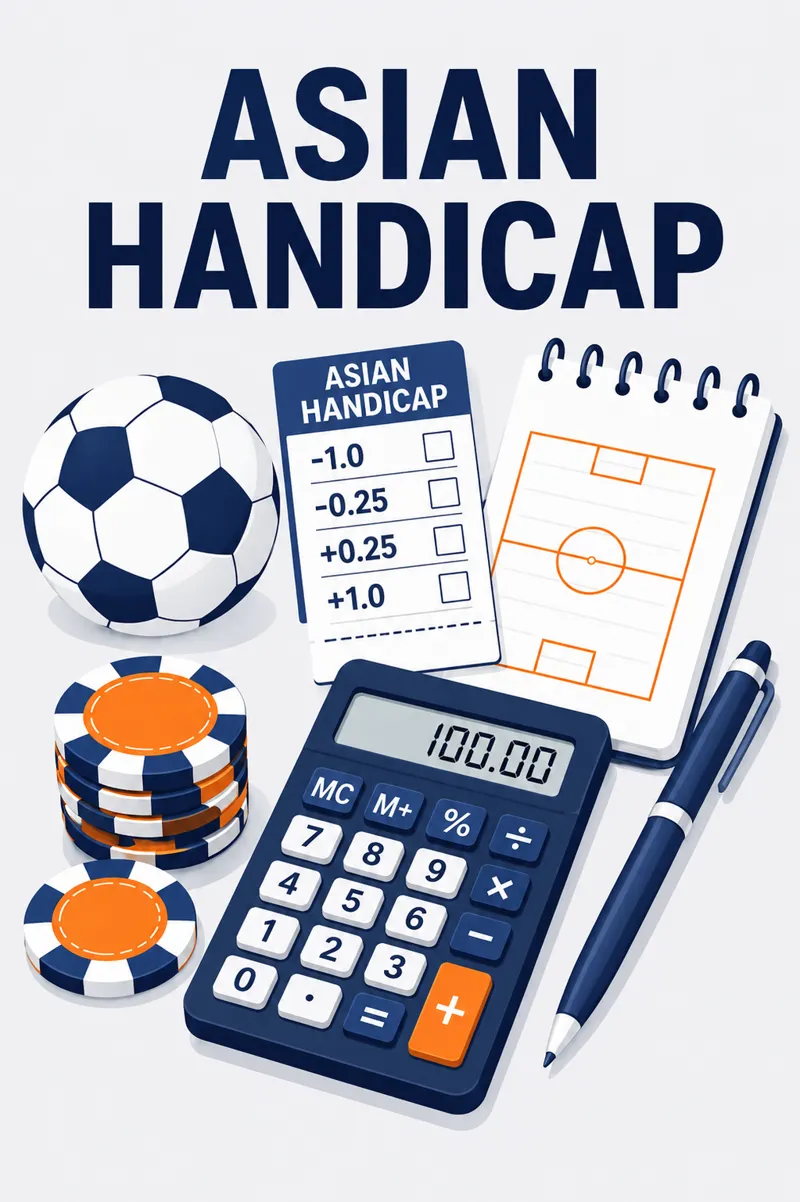
Using this betting format gives more flexible options in situations where standard markets do not reflect the match balance clearly enough. By working with different handicap levels, the bettor can shape risk and expectations more precisely for a specific match. For Indian users, the key point is to understand the line, the settlement rules and the stake impact before placing a bet, while also following the local requirements that apply in their state.
Types of Asian Handicap Lines
What the Different Values Mean
Positive Lines
Give the underdog a virtual advantage before settlement.
Zero Handicaps
The stake is returned if the match ends in a draw, because that result is not settled as either a win or a loss.
Negative Lines
Require the favourite to win by a specific margin.
Asian Handicap uses values such as 0.0, +0.25, -0.5, -1 and others to remove the standard draw option and create a clearer structure for risk management.
Here is how some of the main types work:
- 0.0 (zero handicap): If the match ends in a draw, the stake is returned. This line is useful when the teams are evenly matched and there is no clear favourite.
- +0.5: The bet wins if the selected team does not lose. It is a lower-risk option when backing a team against a stronger opponent.
- -0.5: The selected team must win. Even a draw leads to a losing bet.
- +0.25 / -0.25: These are split lines, combining two adjacent handicaps. For example, +0.25 is split between 0.0 and +0.5, while -0.25 is split between 0.0 and -0.5. This creates half-win or half-loss outcomes in draw scenarios.
- -1.0: The team must win by at least two goals for the bet to produce a full win. If the team wins by exactly one goal, the stake is returned.
Summary table showing the effect of different Asian Handicap lines:
| Line | Win | Loss | Stake Return |
|---|---|---|---|
| 0.0 | Team wins | Team loses | Draw |
| +0.5 | Team wins or draws | Team loses | — |
| -0.5 | Team wins | Draw or team loses | — |
| +0.25 | Team wins (full win), draw (half win) | Team loses | — |
| -0.25 | Team wins | Team loses (full loss), draw (half loss) | — |
| -1.0 | Team wins by 2+ goals | Draw or team loses | Team wins by exactly 1 goal |
Each line type carries a different level of risk. Higher negative values require a stronger winning margin, while positive lines support selections where the underdog is expected to stay competitive.
The right line is selected through match analysis, including form, motivation and statistics. For Indian users, this also means checking the market rules, the settlement logic and the stake impact before using a handicap line as part of a wider betting strategy.
Example Scenarios with Real Teams
In a match between Manchester City and Brentford, the home side would normally be viewed as a clear favourite. A -1.5 line in this context gives bettors a way to look beyond the regular win market, provided their analysis supports a victory by at least two goals. A final score of 3:0 would make this handicap selection successful.
In a fixture between Lazio and Bologna, the teams may look closely matched despite the home advantage. Choosing a +0.5 line for the away team lowers the impact of a draw on the final settlement. With a 1:1 result, the +0.5 selection would be settled as a winning bet.
In a match with a clear difference in quality, such as Bayern and Stuttgart, a -2.0 line can be used when the favourite is expected to dominate. If Bayern win 2:0, the stake is returned because the winning margin matches the handicap line exactly.
A match between Sevilla and Osasuna shows how a positive handicap can protect the underdog selection. With +1.0 on Osasuna and a final score of 1:0 for Sevilla, the stake is returned because the one-goal defeat is covered exactly by the selected line.
In a match between Inter and Torino, the market may offer a -1.25 line for the home team. If the final score is 2:1, the bet is split between -1.0 and -1.5: the -1.0 part is returned, while the -1.5 part loses. This creates a half-loss result and shows why quarter handicap lines require careful settlement checks.
These scenarios show how the strategy works across different match profiles, from strong favourites to balanced fixtures and underdog protection. For Indian users, the focus should stay on the handicap line, the settlement rules and the effect on the stake before placing a bet with any operator that accepts players from India.
Advantages Compared to a Standard Bet
The Asian Handicap approach offers a more flexible betting structure than classic markets such as 1X2. Its main function is to balance the difference in quality between teams by applying a virtual advantage or disadvantage through a handicap line.
The option for partial stake settlement, especially on quarter lines such as +0.25 or -0.75, gives bettors more control over risk exposure. In specific results, part of the stake is returned or only part of the bet is lost, which is not available in the traditional 1X2 market.
Handicap lines allow a more precise reading of expected performance. Instead of choosing only between win, draw or loss, the bettor works with detailed scenarios that account for narrow margins, stronger favourites and competitive underdogs.
When backing favourites at short odds, the standard market often offers limited value. By using a negative handicap, the bettor accepts a higher winning-margin requirement in exchange for a more balanced price on the selection.
One of the main drawbacks of 1X2 betting is the uncertainty created by the draw. With lines such as 0.0 or +0.5, the stake is protected in some draw-related scenarios that would lead to a losing bet on the standard match-winner market.
In a systematic betting approach, this type of market supports statistical analysis because it is built around specific lines and margins. This helps Indian users assess price, probability and risk in a more structured way before placing a bet.
The wide range of available lines makes it possible to choose a handicap that matches the match analysis. This gives more flexibility than a standard bet, which is usually limited to three main outcomes.
Overall, handicap markets provide more varied ways to manage risk and evaluate value. They are especially useful in matches with a clear difference in quality or when the bettor wants a more detailed selection than the basic logic of standard markets allows.
When and How to Use the Strategy
The Asian Handicap approach is most often used in events where there is a clear difference in quality between the teams, or where the match looks balanced but one side still has a narrow edge. The main advantage of this market is the removal of the draw as a standard outcome and the ability to manage risk with greater precision.
When there is a clear favourite in the match but the price for a direct win is too short, this approach gives the bettor a way to work with a negative handicap line. This means the favourite must win by a specific margin for the bet to be settled as successful.
With evenly matched teams, using a positive handicap on the less favoured side gives a more controlled risk profile. For example, a +0.5 or +1 line is useful when the underdog is expected to stay competitive, avoid defeat or lose only by a narrow margin.
When a team shows inconsistent form or has clear performance swings, the range of handicap lines allows a more flexible reading of the match. Depending on the team’s recent pattern, expectations can be adjusted through whole, half or quarter handicap values.
One practical use of this approach is risk reduction in uncertain fixtures. Lines such as 0.0 or +0.25 include stake protection in draw-related outcomes, which is especially important when team news, tactical changes or recent form make the regular match-winner market harder to judge.
Within long-term betting strategies, this type of market helps model risk more accurately and supports a more analytical approach to match selection. Many bettors use statistical models to compare the handicap line with the expected winning margin before deciding whether the price offers value.
This market is a useful tool for bettors who want a more detailed way to distribute risk and make decisions based on the structure of a specific event. For Indian users, disciplined stake sizing, clear understanding of settlement rules and compliance with local state requirements remain essential when using Asian Handicap betting.
Frequently Asked Questions (FAQ)
It is a method for balancing the chances between teams of different strength by adding or subtracting goals or points before the event starts. The aim is to create a more even basis for analysis and selection, while giving bettors a clearer view of how the line affects the final settlement.
The most common lines are whole lines such as -1 or +2, half lines such as -0.5 or +1.5, and quarter lines such as -0.25 or +0.75. They determine how the bet is settled according to the final result and the advantage that has been added or removed.
With this type of bet, the stake is split into two equal parts and placed on two neighbouring lines. For example, a -0.75 bet is split between -0.5 and -1.0. Depending on the final score, the outcome can be a full win, half win, stake return, half loss or full loss.
It is used most often in football, but the same principle also applies to other sports such as tennis, basketball and hockey. The key requirement is that the sport and market allow a line-based advantage to be applied to the result.
As with any betting method, there is a risk of loss, especially when the line value is assessed incorrectly. Indian users should understand the logic behind odds movement, use careful bankroll management and follow the local requirements that apply in their state.
Useful skills include match analysis, tracking market movement and objective probability assessment. Experience with different handicap lines, disciplined staking and a systematic approach to betting also help users understand the risk before placing a selection.