


NASCAR Betting – Complete Guide
Introduction
NASCAR is more than a motorsport series – it is a major racing phenomenon in the United States and has become an interesting option for Indian users who follow international sports betting markets. High speed, long races and unpredictable race dynamics make NASCAR one of the most exciting motorsports for viewing and betting.
NASCAR attracts bettors for several reasons:
- The unique race format – with hundreds of laps and multiple pit stops, where every strategy matters.
- A wide range of betting options – race winner, top 3 or top 10 finish, head-to-head driver markets and more.
- A season calendar with many races across the year, creating regular opportunities to follow the sport.
- Access to analysis, standings and race history, which helps users make more informed decisions.
- The option for live betting, with odds changing quickly according to what happens on the track.
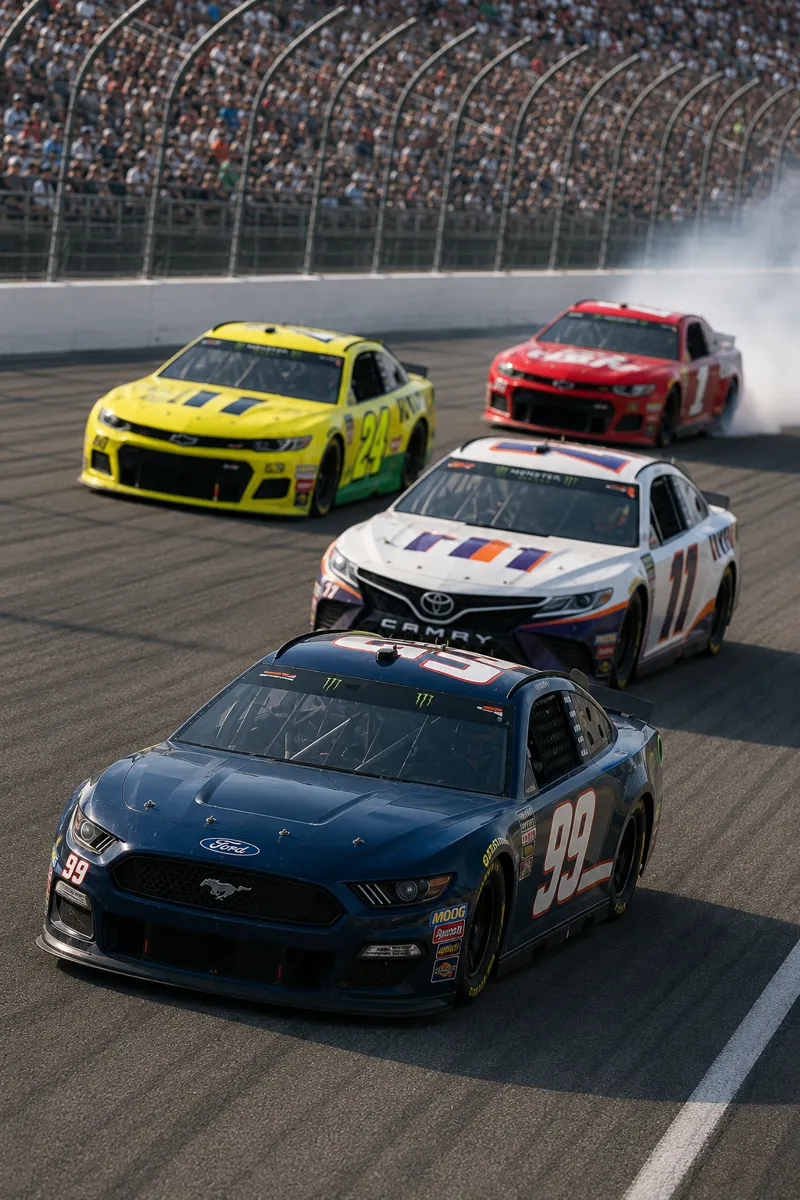
NASCAR began in the middle of the 20th century in the United States and quickly became one of the most watched forms of motorsport in the country. With the development of technology and online betting platforms, NASCAR markets are now accessible to Indian users through international operators that accept players from India and support suitable online account features.
In this guide, we will cover the basics of NASCAR betting – from market types and betting strategies to beginner tips and common mistakes. The goal is to provide clear information that helps you understand the sport, compare markets carefully and bet responsibly while enjoying each race.
Main Rules of the Sport
How It Works
Up to 40 drivers
NASCAR races usually feature up to 40 drivers on the starting grid.
200+ laps
Races can include hundreds of laps depending on the track.
First to the finish
The winner is the driver who finishes first after all scheduled laps.
NASCAR is one of the most popular forms of stock car racing in the United States and attracts millions of viewers across the world. For Indian users who follow international motorsport markets, understanding the basics of the race is essential before placing a bet.
A race usually includes up to 40 drivers competing in specially prepared stock cars on oval tracks or road courses. The goal is simple – finish in first place by staying ahead of the field over a set number of laps.
The format includes qualifying sessions, which decide the starting positions, and stages during the race itself. Each stage awards points for the standings, while the final result also affects the playoff system later in the season. This makes NASCAR interesting not only as a single event, but also from a long-term season perspective.
Important: races are heavily influenced by fuel and tyre strategy, incidents, yellow flags and pit stops. Each of these factors can change the direction of the race and affect betting outcomes.
Before betting on NASCAR, review the driver’s statistics for the specific track, previous results, the technical condition of the car and the weather conditions. Even a change in weather can lead to an unexpected race result.
An informed NASCAR bettor does not rely only on the “popular names”, but studies the internal race factors, follows practice sessions, qualifying and the dynamics of the season. This helps create a clearer view than betting only by instinct.
Types of Bets
In NASCAR betting, there are different options to consider – from backing the race winner to more specialised markets. Each bet type comes with a different level of risk and requires a clear strategy. Understanding how these markets work helps Indian users make more informed betting decisions.
The most popular type is the winner bet – choosing which driver will win the race. This is a higher-risk bet, because even strong favourites can fail to finish or lose positions after incidents. If you follow driver form and track history, the choice becomes more structured.
A more balanced option is betting on a Top 3, Top 5 or Top 10 finish. Here, the driver does not need to win the race, only to finish high enough. This gives the market a wider margin compared with outright winner betting, especially when backing consistent drivers.
With Head-to-Head bets, you choose which of two selected drivers will finish ahead. This type is often easier to analyse, because the focus is only on two cars rather than the full field. It is suitable for users who follow individual driver form closely.
There are also specialised markets such as fastest lap, number of laps led, whether a driver will retire or performance in a specific race stage. These markets usually require a deeper understanding of NASCAR dynamics and race context.
Live betting in NASCAR is fast-paced because race conditions change quickly. Users can react after an incident, a pit stop, a safety car period or a major shift in track position. Quick observation and discipline are important when following real-time markets.
To approach NASCAR betting responsibly, do not rely only on instinct. Combine statistics, track analysis, weather conditions and team form. NASCAR always carries uncertainty, so every bet should be placed with a clear budget and an understanding of the risk.
Available Betting Markets
NASCAR betting offers much more than simply choosing the winner of the race. International operators that accept players from India usually structure their markets around the rhythm of motorsport, giving fans different ways to build a personal betting strategy.
Among the most popular markets are race winner, top 3 finish, top 5 finish and stage winner. For example, when Kyle Larson takes part in the Daytona 500, the market can price him at odds such as 4.00 for the win or 2.10 for a top 3 finish.
For more flexibility, users can also look at group markets – which driver performs best among a selected set of competitors. Examples include “best Hendrick Motorsports driver” or “highest-finishing Toyota driver”.
There are also specialised markets such as number of laps led, starting position versus final position, fastest lap or whether a specific driver will retire. These bets are better suited to users with a stronger understanding of NASCAR race flow.
Some operators also include additional markets such as driver head-to-head, best-finishing team or performance in a separate stage. These alternative markets are useful for players who follow races in detail and compare drivers beyond the outright winner market.
Understanding the different NASCAR markets helps users make more precise betting choices and build a more structured strategy. This is especially important when reviewing statistics, track history and driver form before placing a bet.
Bonuses and Promotions
New users often review welcome bonuses linked to the first deposit. For Indian users, the key points are INR balance support, the minimum deposit, the bonus limit and the wagering requirements attached to the offer. The bonus amount is only useful when the withdrawal rules and qualifying odds are clear.
Free bets are used to try NASCAR markets without using the full account balance. When a free bet is credited in INR, the return is calculated according to the offer terms. This format is useful for testing higher-odds selections, but the user should always check whether the stake is returned or only the profit is credited.
Cashback bonuses return part of a user’s net losses over a defined period. For NASCAR betting, this type of offer is relevant because race outcomes are strongly affected by incidents, pit stops and late changes in track position. The important details are the cashback percentage, the eligible markets and the withdrawal conditions.
Offers such as “Bet of the Day” or selected odds boosts can focus on specific drivers or major NASCAR races. These promotions are worth reviewing only when the boosted price still makes sense after checking the driver’s form, track history and race context.
For users who combine several NASCAR selections, combo bonuses add extra value when more picks are included in one bet slip. This type of promotion should be used carefully, because every added selection increases the risk of the accumulator. Clear limits and controlled staking are more important than chasing a larger payout.
Temporary promotions are usually most relevant around major NASCAR events such as the Daytona 500 or the playoff finals. For Indian users, the main checks are INR compatibility, validity for players from India, wagering rules, expiry dates and withdrawal restrictions. Bonuses should be used as part of a controlled betting plan, not as a reason to increase stakes.
Betting Strategies
One of the most common NASCAR bets is picking the race winner. Here, it is important to follow driver form, track type and championship standings. Some drivers perform better on specific circuits, so reviewing their historical results at similar tracks is an important part of the analysis.
With head-to-head bets, you choose which of two drivers will finish ahead. This is a useful option when the outright winner market is difficult to judge, but there is a clearer view on one direct matchup. Compare their performance during the season and on similar track layouts before placing the bet.
NASCAR often produces unexpected winners, especially at tracks such as Talladega. Smaller stakes on drivers with longer odds can make sense when they have strong recent form or a good record on comparable tracks. This approach should be used with discipline, because longer odds also carry higher risk.
Beyond the driver, the team behind the car also matters. News about mechanical upgrades, setup changes or technical issues can affect performance on race day. Teams with stronger preparation, pit crews and car balance often have an advantage over a full race distance.
Live betting allows users to react to real-time events such as incidents, pit stops and weather changes. For Indian users following international NASCAR markets, this requires careful observation, fast decision-making and strict control over the betting budget.
A responsible NASCAR betting strategy is based on observation, patience and analysis. Do not rely only on famous names – sometimes a driver with the right car and suitable track profile is a better choice than a favourite facing technical or race-condition risks. Combine different angles and adjust your view for each race.
Beginner Tips
At the beginning, focus on the main races in the NASCAR calendar – Daytona 500, Coca-Cola 600, Talladega and other major events. Avoid smaller series until you understand the drivers and teams involved. Research the track, previous winners and how different drivers usually perform there.
Do not get carried away by large odds on outsiders. NASCAR often produces surprises, but strong contenders usually have a reason for shorter prices, especially on oval tracks. Look for value in mid-range odds – between 3.00 and 8.00 – when an experienced driver has a good starting position and a solid track record.
Divide your betting budget into small units and avoid placing too much on a single race. NASCAR is unpredictable, with incidents, pit stops and late cautions often changing the result. Build a staking plan and follow it consistently, whether you are on a winning run or after a losing bet.
A win by your favourite driver does not mean the same result will happen again. Avoid emotional betting and use data, statistics and logic. After a loss, take a break. After a win, do not increase stakes without a reason. Emotional control is a key part of responsible betting.
NASCAR is a dynamic and exciting sport. Bet with discipline, follow the season carefully and keep notes on drivers, teams and tracks. Every race has its own context, but with patience and analysis, you will start to identify better betting situations. Remember that betting should remain a form of entertainment.
Common Mistakes
In NASCAR, every track is different – length, surface, banking and corner profile all matter. Bettors often underestimate the importance of the specific track when judging a driver’s chances. Some drivers are strong on oval tracks but struggle on road courses with more technical turns. Review the driver’s track history before making a selection.
Qualifying results can be misleading. They decide the starting position, but they do not always show the driver’s true race pace and endurance. Some drivers start further back but are strong at overtaking and managing long runs. Analyse longer-term form and race rhythm, not only the qualifying time.
NASCAR is not only about the driver – the team, mechanics and pit strategy play a major role in the final result. A slow tyre change can cost several positions. Do not underestimate the team factor, especially when comparing cars that are close in speed over a full race distance.
Many beginners follow popular bets or fan favourites without checking whether the price offers real betting value. A driver with many fans or strong media attention is not automatically the right choice for the next race. Focus on facts, not hype.
NASCAR betting should not be treated only as a “right now” decision. Without strategy, analysis and a long-term view, results become too dependent on chance. Set a clear budget, define your rules and avoid emotional staking. Consistency is more reliable than reacting to every single race result.
Real Bet Examples
Before the race at Daytona, the market prices Michael McDowell as an outsider at odds of 21.00 to win. A user reviews his form on superspeedway tracks and places a ₹200 bet. If the selection wins, the total return is ₹4,200. This is an example of value betting – looking for an overlooked chance in an underrated driver.
A player uses a free bet credited in INR on the winner of the NASCAR Cup Series final. The selection is Joey Logano at odds of 5.00. If the free bet value is ₹500 and the stake is not returned, the profit is ₹2,000. This shows why promo offers should always be checked for stake-return rules and withdrawal terms.
A bettor builds a strategy around Top 10 finishes, using consistency statistics instead of only backing race winners. Over one month, the user places 3 bets of ₹200 per week on these markets at odds around 1.70. With disciplined staking and enough successful selections, this becomes an example of bankroll management and controlled betting.
In a combined bet on Top 3 finishes for Kyle Busch and Tyler Reddick at total odds of 8.00, the player places ₹300. If one selection has already landed and the second is at risk, the user can consider cash-out where the operator offers it. This is an example of managing risk during a live betting situation.
A player places ₹200 on the fastest lap market for Christopher Bell at odds of 13.00. If the prediction is correct, the total return is ₹2,600. Even when the driver does not win the race, a precise pick in a specialised market can produce a strong return, but it also carries higher risk.
Legislation and Licences
In India, betting rules are not the same across all states, so NASCAR betting should be approached with attention to local requirements. Indian users need to check whether online betting activity is permitted in their state and whether the selected platform accepts players from India under clear terms. This is important for transparency, account safety and responsible use of betting services.
Online NASCAR betting should not be treated as a single national market with identical rules everywhere. The safer approach is to review the legal position in the user’s state, the operator’s terms for Indian users, supported currency options and any restrictions linked to registration, deposits or withdrawals.
Many platforms available to Indian users operate as international operators and display licensing information from recognised jurisdictions. This information is relevant when assessing reliability, but it does not replace the need to follow local rules in India. A careful user checks the licence details, responsible gambling tools and account terms before using the platform.
Using poorly regulated or unclear betting sites for NASCAR markets can create serious risks, including delayed withdrawals, weak account protection and unclear dispute procedures. Operators with vague terms, missing company details or unclear payment rules should be avoided. The platform must provide transparent conditions before a user deposits money.
Before using a platform for NASCAR betting, check the footer, terms and responsible gambling pages for company details, licensing information, security standards and withdrawal rules. For Indian users, it is also important to confirm INR support, account verification requirements and whether the operator accepts players from India under its published terms.
Frequently Asked Questions (FAQ)
To start with NASCAR betting, choose an online operator that accepts players from India and offers motorsport markets. After account verification, you can deposit funds, check the available NASCAR markets and choose from options such as race winner, top 3 finish, head-to-head bets and other race-based markets.
The most common NASCAR bets include race winner, top 3 or top 5 finish, which driver will finish ahead in a direct head-to-head market, and season winner. Some operators also list additional markets depending on the specific race.
Some international operators that accept players from India offer NASCAR betting markets. Before registering, Indian users should check whether the platform supports INR, whether motorsport markets are listed, and whether the terms allow access from their location. Local rules differ between states, so users should also follow the requirements that apply where they live.
Before placing a bet, review the drivers’ form, their performance on the specific track, the championship standings and qualifying results. The history of previous races at the same circuit is also important, along with the team behind the driver and how the car performs on that track type.
Online operators often list live betting during major NASCAR races, especially events from the Cup Series. Live markets can include current leader, head-to-head options and other dynamic race markets. It is important to follow the race in real time and avoid rushed decisions when odds move quickly.
In NASCAR betting, value betting is useful when the odds are higher than the real chance you assign to a driver. Track history, driver statistics, qualifying performance and team form are also important. Avoid bets based only on personal preference and focus on form, race context and responsible bankroll control.