


Horse Racing Betting – The Complete Guide
Introduction
Horse racing in India is one of the country’s oldest organised sports, with a history dating back more than two centuries. The first racecourse was established in Madras in 1777, marking the beginning of a long-standing tradition that blends athletic skill, breeding excellence, and public enthusiasm. Today, horse racing remains a significant part of India’s sporting heritage, with active circuits in Bangalore, Mumbai, Kolkata, Hyderabad, Pune, Chennai, and Mysuru.
The sport is regulated by six major turf authorities that oversee nine racecourses across the country. Each region maintains its own calendar of events, from local derbies to national classics. Indian racing is unique in that competitions are open only to Indian-bred thoroughbreds, whose pedigrees are recorded in the Indian Stud Book. The breeding industry, supported by imported stallions and modern facilities, continues to play a vital role in maintaining international standards.
With growing digital access, horse race betting has also evolved. Indian bettors can now follow live races and place wagers through licensed international platforms that accept Indian rupees and local payment methods like UPI and NetBanking. This development has made the sport more interactive and accessible than ever before.
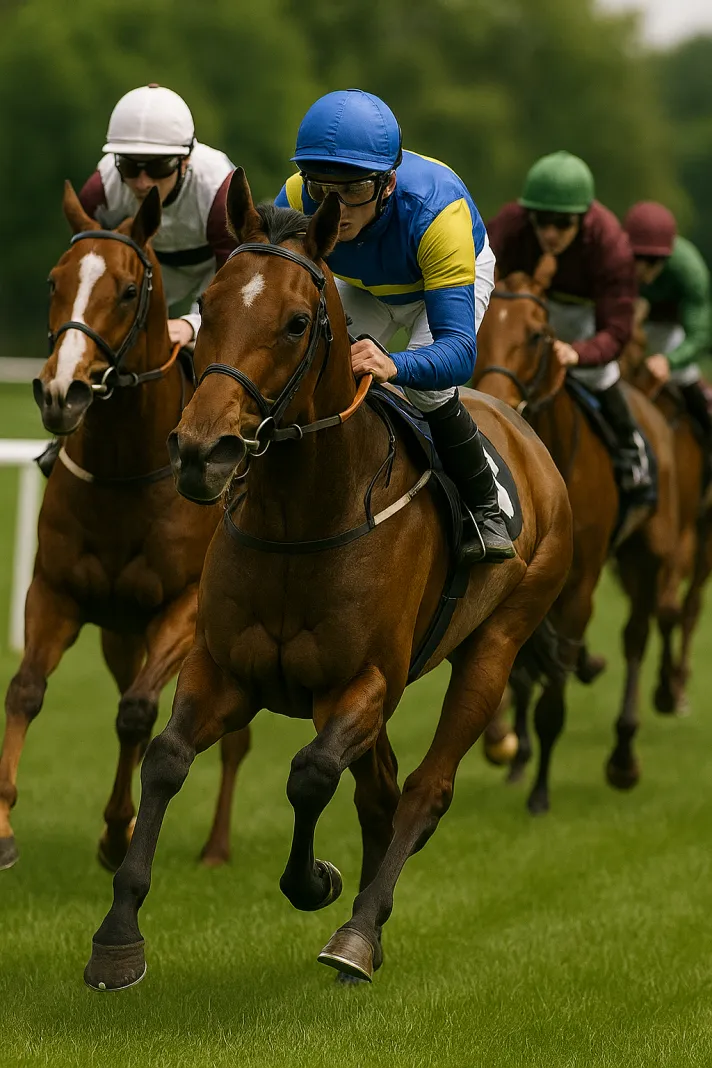
Historically, betting on horse racing in India was introduced alongside the sport itself during the British colonial era. Over time, it became one of the few legally recognised forms of wagering in the country. The Supreme Court of India, in its landmark judgment of 1996, affirmed that horse racing involves skill rather than pure chance — setting it apart from other gambling activities.
This guide provides a complete overview of horse racing betting in India — covering the core rules, types of bets, popular racecourses, strategies, bonuses, responsible gaming, and the legal framework. Its goal is to help readers understand the sport, place informed bets responsibly, and appreciate horse racing as both a cultural and analytical pursuit.
Core Rules of Horse Racing
How Horse Racing Works
Horse and Jockey
Each horse is ridden by a professional jockey, aiming to reach the finish line first.
Race Distance
Races vary from short sprints of around 1,000 metres to long-distance events exceeding 3,000 metres.
First Past the Post
The winner is the horse whose nose crosses the finish line before any other competitor.
Horse racing in India follows a set of structured and time-tested rules designed to ensure fairness, skill, and consistency. Each race involves a group of thoroughbred horses ridden by licensed jockeys competing over a fixed distance. The primary objective is simple — the horse that crosses the finish line first is declared the winner, although margins can be extremely close and are often decided by photo finish technology.
There are several forms of racing across India, the most common being flat racing, conducted on turf or dirt tracks without obstacles. Other formats, such as jump racing or harness racing, are rare in India but popular in international circuits. Each race is classified into categories based on factors such as age, class, weight, and past performance, ensuring fair competition and balanced handicapping.
Every event is supervised by official stewards, starting judges, and racing commentators to maintain transparency. The sport operates under the regulations of regional turf authorities such as the Royal Western India Turf Club (RWITC), Bangalore Turf Club, and Hyderabad Race Club. These bodies oversee licensing, race schedules, and integrity checks across India’s major venues.
Important: Race outcomes can be influenced by multiple variables — track condition, weather, horse form, jockey strategy, and starting position. Even slight changes in surface or temperature can dramatically alter a horse’s performance, making analysis and preparation essential before placing any bet.
Understanding the context of each race is equally crucial — whether it’s a Classic event like the Indian Derby or a regular seasonal race in Mysuru or Chennai. Factors such as trainer reputation, horse lineage, and track familiarity can significantly impact results. Even lesser-known horses can outperform favourites under the right conditions.
Knowing the rules of horse racing is only the beginning. The true skill lies in observing race pace, identifying momentum shifts, and spotting value opportunities before others do. Whether watching the Indian Oaks at Mahalaxmi or the Bangalore Derby, understanding the rhythm and dynamics of each race makes horse racing an endlessly fascinating sport for both enthusiasts and bettors.
Types of Horse Racing Bets
The world of horse racing betting in India offers a diverse range of markets designed for both newcomers and experienced punters. Understanding the most common bet types is essential before wagering, as each carries its own level of risk, reward, and strategy. Whether you prefer straightforward win bets or more advanced exotic wagers, knowing the mechanics behind them helps you make better-informed choices.
The simplest and most traditional option is the Win bet. You select a single horse to finish first in a given race. If that horse crosses the finish line before all others, you win. This bet type is common among both casual and seasoned bettors and forms the foundation of all horse racing betting. Events like the Indian Derby or Bangalore Summer Cup often attract thousands of Win bets due to their prestige and competitive nature.
A Place bet offers a safer alternative. Your horse needs to finish within the top positions—usually the top two, three, or four depending on the race size. While returns are smaller compared to a Win bet, the higher probability of success makes this market particularly appealing to those who prefer consistent returns over big risks.
The Each Way bet combines two wagers in one: a Win bet and a Place bet on the same horse. If your selection wins, both parts pay out; if it places, you still receive a return from the place portion. This is a strategic choice for bettors who believe a horse has strong potential but faces tough competition, especially in high-profile races like the Indian Oaks or St. Leger.
Experienced bettors often explore Forecast and Tricast markets for higher payouts. In a Forecast bet, you must correctly predict the first two finishers in exact order. A Tricast extends this to the first three horses. These markets carry higher risk but also significantly higher rewards, requiring sharp analytical skills and deep knowledge of horse form, jockey performance, and track conditions.
The Quinella is a flexible alternative, allowing you to pick two horses to finish first and second in any order. Other exotic bets—such as Superfecta (top four) or Exacta (first two in order)—are also available at select Indian turf clubs and international betting platforms. While these carry a higher degree of uncertainty, they are popular among data-driven bettors who enjoy complex strategies.
In-race betting (similar to live or in-play betting) allows bettors to place wagers as the race unfolds. Although traditional horse racing events are short, certain online platforms offer quick-response betting during longer races or multi-race events. This form of betting requires strong observation skills, quick decision-making, and familiarity with the pace of Indian racing tracks.
The Accumulator (or multi-race bet) links several selections from different races into a single ticket. To win, every selection must be successful. While riskier, accumulators offer potentially large payouts and are particularly popular during major racing weekends that feature events across multiple turf clubs like Hyderabad, Mysuru, and Pune.
No matter which bet type you choose, always understand its structure and the factors that influence it. Avoid chasing high odds without analysis. Instead, base your choices on form study, track conditions, and trainer-jockey combinations. Responsible betting is built on patience, research, and discipline — key principles for long-term success in horse racing.
What Horse Racing Betting Markets Are Available
Modern horse racing betting in India extends far beyond simply predicting which horse will win. Today’s bookmakers and turf clubs offer a wide selection of markets that cater to different betting styles and experience levels. This diversity allows punters to apply a strategy that matches their analysis, risk tolerance, and understanding of the sport.
The most commonly used horse racing betting markets include Win, Place, and Each Way bets. These form the foundation of racing wagers at Indian venues such as Bangalore Turf Club, Hyderabad Race Club, and Mahalaxmi Racecourse in Mumbai. They are straightforward, well-regulated, and ideal for those looking to enjoy racing responsibly.
For bettors who prefer more analytical markets, Forecast and Tricast options provide higher potential returns. A Forecast requires predicting the first two finishers in the exact order, while a Tricast extends this to the top three. These markets are widely available through both local turf pools and international platforms, rewarding knowledge of form, pace, and trainer-jockey partnerships.
The Quinella market lets you select two horses to finish first and second in any order, offering slightly lower odds but higher flexibility. Similarly, the Exacta requires the correct finishing order of the top two horses, providing higher payouts. Both are highly popular in Mysuru and Chennai race meets where competitive fields make outcomes unpredictable.
India also maintains a strong tradition of pool betting, commonly referred to as the Tote system. Here, all bets are collected into a shared pool, and payouts are calculated after deducting a commission. Unlike fixed-odds betting, Tote returns fluctuate depending on how many people back each horse. It remains one of the most transparent and community-driven betting models in Indian racing.
Some platforms also offer specialty markets such as betting on the winning margin, top jockey of the day, or the trainer with the most wins during a meeting. These markets are often introduced during prestigious events like the Indian Derby or Invitation Cup, providing unique opportunities for bettors who prefer broader predictions beyond single-race outcomes.
With the growth of digital platforms, Indian bettors can now access international horse racing markets covering events from Dubai, Singapore, and Australia. Offshore bookmakers often provide live odds and streaming features, allowing users to monitor races and place wagers in real time using INR via payment methods such as UPI or NetBanking.
Understanding how each market operates allows you to build a precise and effective betting plan. Knowing when to back a favourite in a Win market, when to opt for Each Way insurance, and when to explore Tote pools or Forecast predictions can make horse racing both strategic and rewarding. In Indian racing, patience, preparation, and situational awareness matter far more than instinct.
Bonuses and Promotions
Many international platforms that accept Indian bettors, including well-known names such as Betway, 10Cric, and Parimatch, offer welcome bonuses designed to attract new users. These are often linked to your first deposit and can include bonus funds or free credits for exploring different horse racing markets. Always review the terms and wagering requirements carefully before activating a bonus.
Free bet credits are a popular incentive in horse racing promotions. They allow you to place a wager on a selected race without risking your own money. If your horse wins, you keep the net profit while the credit amount is excluded from returns. This format helps beginners understand market movement and betting flow in a low-risk environment.
Some India-focused operators feature cashback systems or loyalty programs that return a percentage of losses or reward frequent play. Cashback is typically calculated weekly or monthly and can be used as bonus credit on upcoming races. This approach promotes long-term, responsible engagement rather than impulsive betting.
Enhanced odds or price boosts are common during major Indian racing events such as the Indian Derby or Invitation Cup. These offers provide slightly better returns on specific horses or markets. While they can improve payout potential, bettors should always verify maximum stake limits and eligibility conditions to ensure the offer suits their betting plan.
Some international and local platforms offer multi-race or accumulator boosts for bettors who combine several races on a single ticket. If all selections win, the operator adds a bonus percentage to your total payout. While this can increase profits, it also raises overall risk, making such offers better suited for experienced punters familiar with multiple race forms.
During major racing festivals like the Indian Classics, Derby Weekends, or international events such as the Dubai World Cup, some bookmakers introduce limited-time contests, risk-free bets, or enhanced pools for Indian users. These promotions can make betting more engaging, but always prioritise responsible play and view bonuses as optional tools to enhance enjoyment—not as guaranteed profit sources.
Horse Racing Betting Strategies in India
In India’s established horse racing betting scene, value betting remains a key concept. It involves identifying odds that underestimate a horse’s real chance of winning. For example, if a contender at the Bangalore Turf Club shows strong form on soft ground but is priced longer than expected, that may represent a value opportunity. Over time, consistently spotting such mispriced horses can lead to sustainable returns.
A disciplined approach used by professional punters is flat betting — wagering the same stake on every race regardless of confidence or odds. Whether you are betting on a local race at Mysuru or a premier event like the Indian Derby, this method helps control spending and avoid emotional reactions. It’s one of the most reliable ways to practise long-term bankroll management.
Experienced Indian bettors often apply situational strategies based on race conditions. For instance, backing a horse known for strong finishes in longer distances when the pace looks fast early, or focusing on proven performers on rain-affected tracks. Track condition, draw bias, and jockey decisions are vital indicators that can shift outcomes, especially in competitive Group races.
Successful horse racing strategies rely heavily on data analysis and form study. Examining each horse’s recent runs, preferred distance, trainer history, and jockey partnership helps determine realistic expectations. Many punters in India also review official track reports and handicap ratings published by turf authorities before placing a bet. In this sport, informed analysis outweighs intuition.
Every betting strategy requires bankroll management and emotional discipline. Set a fixed budget for each meeting and avoid chasing losses, especially after a close defeat or a disqualified result. With variables like weather changes, photo finishes, or stewards’ inquiries, maintaining calm analysis is crucial. The most consistent Indian punters treat racing as strategic entertainment, not a source of guaranteed income.
Ultimately, no method guarantees profit. The best strategy for Indian horse racing bettors combines logic, observation, and patience. Study the race card, understand track nuances, and follow trends from major turf clubs. Betting on horse racing should always remain a measured and responsible activity, focused on skill, insight, and enjoyment of one of India’s oldest sporting traditions.
Beginner Tips
Don’t focus on the number of bets — focus on races you understand. Choose events where you can access reliable information such as the horse’s form, jockey record, and trainer statistics. Avoid betting on obscure or poorly documented races. Fewer, well-researched bets often produce stronger long-term results.
Be cautious with very short odds (e.g. 1.10–1.30) and extremely long shots (e.g. above 10.00). Low odds may look safe but often carry limited value, while very high odds rarely deliver. The most realistic opportunities in horse racing often fall between the 2.00–5.00 range, depending on field size and track conditions.
Your bankroll is your foundation for sustainable betting. Never risk more than 2–5% of your total balance on a single race. Avoid increasing your stakes after a loss — it’s one of the most common beginner mistakes. Keep a betting journal where you record wagers, reasoning, and outcomes. Regular analysis helps you identify patterns and refine your strategy.
Emotional control is crucial in horse racing. A single unlucky loss should not influence your next decision. If you lose, pause and reassess; if you win, stay disciplined. Don’t chase results or double your stakes out of excitement. Long-term success in betting comes from calm, consistent judgment, not from impulsive reactions.
Only bet with money you can afford to lose. Treat horse racing betting as an entertaining skill-based activity, not a shortcut to profit. Use form guides, expert analysis, and official race data before placing a wager. Every successful punter in India started as a beginner — take time to learn the sport, understand the patterns, and enjoy the thrill responsibly.
Common Mistakes
One of the most frequent mistakes among new Indian punters is relying purely on instinct instead of studying the race data. In horse racing, outcomes depend on form, jockey skill, ground condition, and pace — not luck alone. A spontaneous bet placed “for fun” can quickly become a repeated loss. Always analyse facts before trusting your gut.
Many bettors back their favourite horse, jockey, or stable without considering current form or conditions. Emotional bias can cloud judgment, leading to poor decisions. Smart betting means evaluating recent performances and track suitability, not following personal preference or popularity.
Overlooking form and track conditions is another costly error. A well-known horse may underperform if the ground is softer than usual or the distance doesn’t suit. Always review the latest results, trainer comments, and track reports before placing your bet. Betting based solely on reputation often leads to disappointment.
One of the biggest pitfalls is chasing losses — increasing your stake after a losing race to recover quickly. This approach usually magnifies losses and breaks discipline. The smarter strategy is to pause, analyse, and adjust. In Indian horse racing, patience and consistency always outperform impulsive betting and emotional decisions.
Popular Racecourses and Tournaments in India
The Indian Derby, held annually at the Mahalaxmi Racecourse in Mumbai, is the crown jewel of Indian horse racing. Established in 1943, it attracts elite thoroughbreds from across the country and features one of the largest prize pools in Indian racing. The event symbolizes prestige, tradition, and competitive excellence — much like the Epsom Derby in the UK.
India hosts five major Classic races that mirror the structure of British racing: the 1,000 Guineas, 2,000 Guineas, Indian Oaks, Indian Derby, and St. Leger. These events take place across leading turf clubs, primarily in Mumbai and Pune, and are open exclusively to Indian-bred horses. Each race highlights the finest balance between breeding, training, and racing strategy.
Another prestigious event is the Invitation Cup, a rotating Group 1 competition hosted by different turf authorities each year, including Bangalore, Hyderabad, and Kolkata. Alongside it, regional derbies like the Bangalore Derby and Hyderabad Derby feature prominently on the national calendar, drawing passionate crowds and substantial betting activity.
Indian racing is governed by six major turf authorities: the Royal Western India Turf Club (RWITC), Bangalore Turf Club, Hyderabad Race Club, Madras Race Club, Royal Calcutta Turf Club, and Mysore Race Club. Each operates its own racecourses and maintains high standards of regulation, stewarding, and integrity. Together, they form the backbone of India’s organized racing network.
Indian horses and trainers have also gained recognition abroad. Horses such as Mystical and Saddle Up have represented India in events in Dubai, Singapore, and Malaysia, achieving notable international success. Although quarantine restrictions currently limit global participation, the quality of Indian thoroughbreds continues to improve through advanced breeding programs and imported stallions.
Responsible Gambling
Responsible gambling is essential for maintaining a safe and enjoyable betting experience. In India, where horse racing betting has a long-standing tradition, managing time and budget wisely ensures that the activity remains a form of entertainment and not a financial burden. Betting should enhance your enjoyment of the sport — not create stress or dependency.
The first step in responsible wagering is to set personal limits on deposits, total spending, and time spent betting. Many licensed international platforms that accept Indian users provide tools for self-exclusion or temporary cooling-off periods. These features allow bettors to pause their activity whenever they feel that betting is affecting other areas of life.
Recognising early signs of problem gambling is crucial. Behaviours such as chasing losses, betting beyond your means, or hiding activity from friends and family are clear warnings that intervention is needed. Taking regular breaks, tracking your spending, and practising transparency help maintain balance and control.
India supports several initiatives promoting safe and transparent gaming. The All India Gaming Federation (AIGF) enforces the Responsible Gaming Code, encouraging operators to implement player protection measures and age verification systems. International organisations such as GamCare and Gamblers Anonymous provide educational materials, helplines, and online counselling for individuals seeking guidance. Remember: betting on horse racing should always be conducted responsibly — with awareness, moderation, and respect for the sport.
Payment Methods in India
Modern horse racing betting platforms that accept Indian players support a wide range of secure and convenient payment methods. Deposits and withdrawals can be made using UPI (Unified Payments Interface), Paytm, Google Pay, and NetBanking — all widely trusted across India’s digital ecosystem. These options allow bettors to manage funds easily in Indian Rupees (INR) without dealing with international conversion fees.
The most popular choice for Indian users is UPI, which enables instant bank-to-bank transfers through apps such as Paytm, PhonePe, and Google Pay. These transactions are processed within seconds and usually free of charge. For online betting on horse racing, UPI is valued for its speed, transparency, and ease of use, especially during live events when timing matters.
NetBanking remains a preferred option for users who prefer traditional online banking. It provides direct access to a bank’s secure interface for both deposits and withdrawals. While transfer times may vary depending on the institution, NetBanking offers excellent security and traceability, making it suitable for handling larger sums often associated with major race meetings like the Indian Derby or Invitation Cup.
Some licensed international horse racing platforms accessible to Indian players also accept cryptocurrencies such as Bitcoin (BTC), Ethereum (ETH), or USDT. These offer greater privacy and faster global transactions. However, users should always be aware of exchange rate volatility and local tax obligations before choosing crypto-based deposits or withdrawals.
Compared to global e-wallets like PayPal or Skrill, local methods such as UPI and Paytm offer faster settlements and smoother integration with Indian banks. Regardless of the method, always choose licensed platforms that use SSL encryption and comply with KYC (Know Your Customer) and anti-fraud verification. Following these precautions ensures your betting transactions remain safe, transparent, and fully compliant with Indian financial standards.
Glossary of Horse Racing Betting Terms
Understanding key horse racing betting terms helps Indian bettors navigate racecards, markets, and odds more confidently. Below is a reference list of commonly used expressions and what they mean in simple, practical terms.
- Win Bet: The most basic wager — you back a single horse to finish first. If it wins, you collect your payout based on the listed odds.
- Place Bet: A safer option where your horse needs to finish within the top positions (usually top two, three, or four depending on the race size).
- Each Way (E/W): A combination of a Win and Place bet on the same horse. If your horse wins, both bets pay out; if it places, only the place portion returns a profit.
- Forecast: A bet predicting the first two finishers in the exact order.
- Tricast: Similar to a Forecast but extends to the first three horses in the exact order — higher risk but higher reward.
- Quinella: A wager picking two horses to finish first and second in any order. More flexible than a Forecast.
- Tote Betting: A pool-based system where all bets are collected into a shared pot. Payouts are determined by dividing the pool among winners after deductions.
- Accumulator (Multi-Race Bet): A ticket combining multiple races. Every selection must win for the overall bet to succeed — riskier but with larger potential returns.
- Handicap Race: A type of race where horses carry different weights assigned by officials to equalize chances based on past performance.
- Odds: Numerical values that represent how much you could win compared to your stake. Shorter odds mean favourites; longer odds mean outsiders.
- Stake: The amount of money you place on a bet. Responsible staking is key to effective bankroll management.
- Bankroll: The total amount of funds reserved exclusively for betting. Managing it carefully helps you sustain long-term activity.
- Photo Finish: A method used to determine the winner when two or more horses cross the finish line almost simultaneously.
- Steward’s Inquiry: A post-race investigation by officials to check for rule violations or interference during the race.
- Bookmaker (Bookie): The platform or operator that sets odds, accepts bets, and pays out winnings for horse racing events.
- Value Bet: A situation where the odds offered are better than the horse’s true probability of winning, identified through careful form and race analysis.
Familiarity with these terms will significantly improve your understanding of horse racing betting in India. Learning the language of racing helps you read racecards accurately, evaluate odds, and make informed, responsible decisions when placing your bets.
Real-Life Betting Examples
At the Bangalore Turf Club, a bettor identifies a horse named Royal Vision priced at odds of 8.00 despite showing consistent top-three finishes on similar ground. After analysing previous race times and track reports, they back Royal Vision for the win. The horse triumphs by half a length, delivering a strong value betting example where informed data analysis outperformed market perception.
During a monsoon-season meeting at the Hyderabad Race Club, a bettor notices that the track has turned soft due to overnight rain. They switch focus from a short-priced favourite to a mud-loving outsider trained by S. Padmanabhan, known for handling heavy surfaces. The horse wins comfortably, showing how understanding track conditions can lead to profitable opportunities.
In the Indian Oaks at Mahalaxmi Racecourse, a bettor uses an Each Way strategy on a filly priced at 12.00. While she finishes second behind the favourite, the place portion still pays out, generating a steady return. This demonstrates the effectiveness of Each Way bets in large, competitive fields where high-value selections have realistic chances of placing.
After joining a licensed international bookmaker that supports Indian Tote pools, a bettor receives a ₹500 free bet credit. Instead of risking it on a random horse, they use it to play a Quinella bet on the Mysore Derby, selecting two consistent performers. Both finish in the top two positions, converting the free credit into a meaningful profit — a smart example of strategic bonus use.
A bettor builds a multi-race accumulator covering events in Kolkata, Chennai, and Bangalore. After four successful legs, they decide to use the cash-out option before the final race to lock in guaranteed profit. The final favourite loses, confirming the bettor’s smart, disciplined decision. This is a textbook case of responsible risk management and understanding when to protect returns.
Laws & Licensing in India
The legal status of horse racing betting in India is defined by a mix of national and state-level regulations. There is no single unified federal law that governs online betting across the country. The primary legislation, the Public Gambling Act of 1867, predates modern digital and racing platforms, leaving its interpretation largely to individual states and racing authorities.
Horse racing occupies a unique legal position in India because it is officially recognised as a game of skill rather than chance. In the landmark 1996 Supreme Court ruling in Dr. K.R. Lakshmanan v. State of Tamil Nadu, the Court declared that betting on horse racing involves skill, knowledge, and judgment — distinguishing it from games of pure luck. This ruling effectively allows licensed betting at authorised Turf Clubs across India.
Today, legal horse race betting takes place at racecourses regulated by six major authorities: the Royal Western India Turf Club (RWITC), Bangalore Turf Club, Hyderabad Race Club, Madras Race Club, Royal Calcutta Turf Club, and Mysore Race Club. These organisations operate under state permissions and follow strict internal codes regarding wagering, stewarding, and taxation compliance.
While on-course betting is permitted through licensed bookmakers and Tote systems, online horse race betting remains in a grey area. Many Indian bettors use offshore platforms that are licensed in international jurisdictions such as Malta, Gibraltar, or Isle of Man. These operators are outside direct Indian jurisdiction but often support local payment options like UPI and NetBanking and follow responsible gambling standards.
The All India Gaming Federation (AIGF) promotes the Responsible Gaming Code, encouraging transparency, age verification, and fair betting practices. As India modernises its gaming sector, discussions continue regarding a national framework that would bring consistent regulation and taxation. Until then, bettors are advised to engage only with licensed, verifiable, and transparent operators to ensure a safe and compliant betting experience.
Frequently Asked Questions (FAQ)
To begin, register with a licensed international bookmaker or an official Indian Turf Club platform that accepts Indian users. Complete your KYC verification and make your first deposit using UPI, Paytm, or NetBanking. Once your account is verified, you can browse available Win, Place, and Each Way markets and place your first bet responsibly.
Yes, horse racing is legally recognised as a game of skill under Indian law, based on the 1996 Supreme Court ruling in Dr. K.R. Lakshmanan v. State of Tamil Nadu. Betting is permitted at licensed racecourses through authorised Turf Clubs. However, online betting remains in a grey area — it is allowed only through offshore licensed operators that follow responsible gambling standards and accept Indian payment methods.
The most common options include UPI, Paytm, Google Pay, NetBanking, and occasionally cryptocurrencies. All of these support transactions in INR and provide secure deposits and withdrawals. Always ensure your platform uses SSL encryption and complies with KYC verification.
Common bet types include Win, Place, Each Way, Forecast, Tricast, and Quinella. You can also participate in Tote pool betting, where payouts are determined by the total amount wagered. Each option carries different levels of risk and reward, allowing you to tailor your strategy.
Set a fixed monthly budget for horse racing bets and limit your stake per race to 2–5% of your bankroll. Avoid increasing stakes after a loss and track all wagers in a logbook. Responsible bankroll management ensures sustainability and reduces emotional decision-making.
If betting starts to feel excessive, take a break. Most platforms offer self-exclusion tools or allow you to set deposit and time limits. You can also contact the All India Gaming Federation (AIGF) or international groups such as GamCare for confidential advice and support.
Yes. Many international bookmakers offer betting on races in Dubai, Singapore, Australia, and the UK. Indian users can participate through licensed offshore platforms that accept INR deposits. Always confirm that the platform complies with international licensing and responsible gaming regulations.
Withdrawals can be processed directly to your bank account or UPI ID. Processing usually takes between a few hours and two business days, depending on the operator. Ensure your account is fully verified with valid ID and address proof before requesting payouts to prevent delays.
You must be at least 18 years old to participate in horse racing betting in India, both online and at physical racecourses. Licensed operators are required to verify age through KYC checks before allowing deposits or wagers.
Conclusion – The Future of Horse Racing Betting in India
Horse racing betting in India is entering a period of renewed growth and modernisation. With centuries-old traditions and an evolving digital infrastructure, the sport is finding new life through online accessibility and advanced wagering technologies. As major Turf Clubs expand their digital presence, interest among younger bettors and casual enthusiasts is steadily increasing.
The long-term future of horse racing betting depends on structured regulation and transparent licensing frameworks. With institutions like the All India Gaming Federation (AIGF) and policy bodies such as NITI Aayog pushing for responsible gaming standards, India could gradually move toward clearer national guidelines. Proper oversight would ensure fairness, protect bettors, and strengthen confidence in the integrity of the sport.
The integration of AI-driven analytics, live streaming platforms, and secure UPI payment systems is reshaping how Indian punters engage with horse racing. Real-time race tracking, data visualisation, and form prediction tools are making wagering smarter and more transparent. As technology evolves, accessibility and user trust will continue to improve.
Horse racing remains one of India’s oldest organised sports, contributing to the country’s cultural heritage and economic ecosystem. The sport supports thousands of jobs across breeding, training, and hospitality sectors. With effective regulation and responsible participation, betting on horse racing can become a legitimate contributor to India’s digital and leisure economy, generating tax revenue and sustaining livelihoods.
In conclusion, the future of horse racing betting in India lies in responsible innovation. Balancing heritage with modern technology, and freedom with regulation, will define its next chapter. If nurtured carefully, India’s horse racing industry can evolve into a transparent, skill-based, and globally respected ecosystem that upholds integrity while embracing progress.